

A scavenger hunt game is one of the most flexible and fun party activities you can plan. Whether you’re hosting a scavenger hunt birthday party, organizing an office scavenger hunt, or setting up a nature scavenger hunt for a group, this guide walks you step-by-step through planning, rules, variations, and safety tips so your event runs smoothly and everyone has a blast.
What is a Scavenger Hunt Game and How Does it Work?
At its core a scavenger hunt game asks players or teams to find items, solve clues, or complete small challenges within a time limit. Traditional scavenger hunts use a list of objects to collect; clue-based versions lead participants from one location to the next.
You can tailor a scavenger hunt game for kids, teens, or adults and adapt the difficulty for indoor or outdoor settings. This section explains game structure, scoring, and simple prize ideas to motivate players.
Make your own DIY Treasure Map Scavenger Hunt Note Cards & Stickers (sponsored link).
Game Structure
A typical scavenger hunt game starts with teams receiving their lists or first clues. Players then race to find each item or solve each challenge in any order, or, in the case of a treasure-style version, follow clues in sequence. Depending on your setup, you can play indoors, outdoors, or even online. Teams might need to photograph each find, bring items back, or perform short challenges to earn points.
Scoring System
Scoring is flexible and can match your theme. You can award one point per item found or use a tiered system, easy items earn fewer points while rare or creative finds earn more. Time bonuses can reward teams that finish early, and penalties can apply for missed items or broken rules. Having a simple score sheet or mobile app helps you tally results quickly at the end of the scavenger hunt game.
Prize Ideas
Prizes don’t have to be expensive. For a scavenger hunt birthday party, consider small themed gifts or trophies. In an office scavenger hunt, gift cards or team lunches work well. For family or outdoor scavenger hunt events, handmade certificates or local treats add a nice personal touch. The key is to recognize participation and celebrate creativity as much as winning.
How to Plan a Successful Scavenger Hunt Game
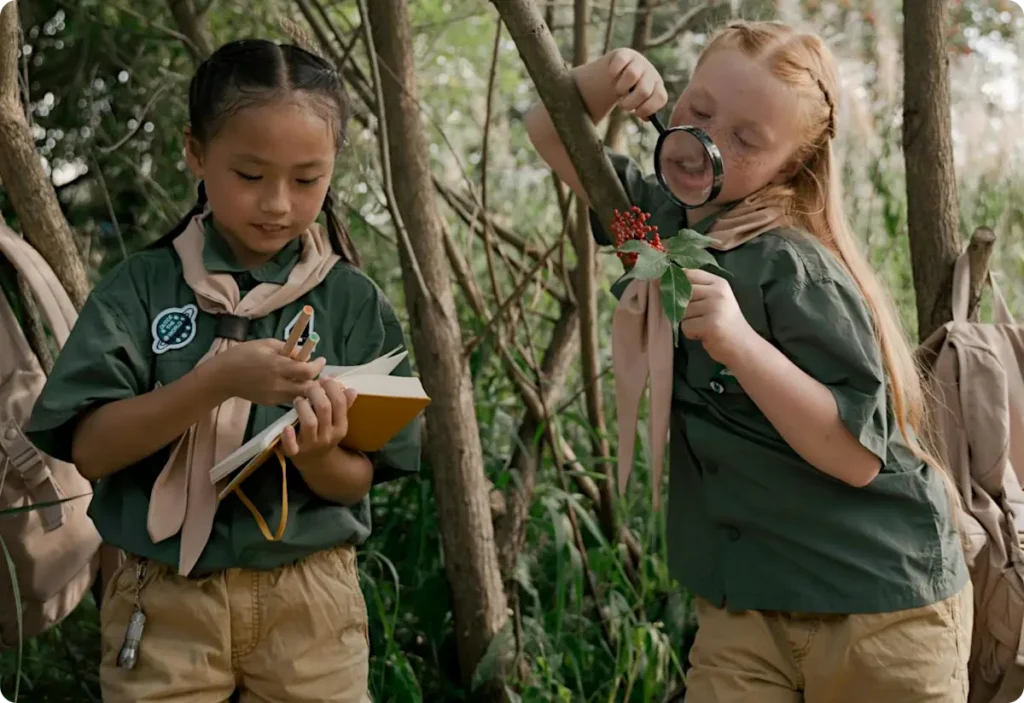
Start by choosing a theme and location, an indoor scavenger hunt works great for rainy days while an outdoor scavenger hunt maximizes space and exploration. A well-designed scavenger hunt game encourages creativity and makes sure every participant has a role.
Make a checklist of items or clues, set team sizes, and decide on time limits. For a scavenger hunt birthday party, include themed prizes and age-appropriate clues. For a corporate event, an office scavenger hunt can focus on teamwork and problem-solving. Keep rules clear and test your clues in advance so the scavenger hunt game runs without hiccups.
Scavenger Hunt Themes and Variations
No two scavenger hunts need to be the same. You can tailor a scavenger hunt game to fit any event, season, or age group by changing the theme, location, and style of clues. From festive holiday hunts to adventurous outdoor challenges, themed scavenger hunts make each game feel fresh and memorable. Below are some of the most popular variations you can try for different occasions and participants.
Holiday and Seasonal Versions
- Christmas scavenger hunt: Hide holiday ornaments, use riddles tied to festive traditions, and include small stocking-stuffer prizes.
- Halloween scavenger hunt: Use spooky clues, glow sticks for night hunts, and make safety a priority.
- Easter scavenger hunt: Blend classic egg hunting with clue-based tasks for varied challenge levels.
- Thanksgiving scavenger hunt: Include gratitude-themed items and family-friendly challenges.
Audience-specific Versions
- Scavenger hunt for teens: Ramp up the puzzles with codes, photo challenges, and scavenger hunt game elements that encourage social sharing.
- Adult scavenger hunt: Include gourmet or cocktail-themed tasks, trivia stops, or bar-based clues for a night out.
- Scavenger hunt birthday party: Customize to the celebrant’s interests and age for a memorable celebration.
- Scavenger hunt for large groups: Use multiple parallel routes, staggered starts, or a checkpoint system to keep big groups engaged.
Indoor vs Outdoor Scavenger Hunt Game Strategies
An indoor scavenger hunt is perfect for smaller spaces and younger children, use picture clues and safe household items. You can even use a phone app to time and score an indoor scavenger hunt game for extra convenience.
An outdoor scavenger hunt lets participants explore parks or neighborhoods; a nature scavenger hunt can teach observation skills and work well for school groups. For an outdoor scavenger hunt, consider weather, permits for public spaces, and clear boundaries to keep the hunt contained.
Office and Team-building Scavenger Hunt Game Ideas
An office scavenger hunt can boost morale and improve collaboration. Create tasks that require departments to work together, use workplace trivia, or hide company-branded items. Keep timing tight so normal work isn’t disrupted and offer rewards that feel meaningful, like an afternoon off or a team lunch. Short, strategic challenges help the office scavenger hunt feel like a productive team exercise rather than a distraction.
Backyard Scavenger Hunt Game for a Kids Party Example
A backyard scavenger hunt game is perfect for active kids, it uses fresh air, simple props, and playful challenges that keep children moving and laughing. Below is a full step-by-step setup and a set of ready-to-use clue examples that work for ages 5–10. Swap or simplify clues for younger children or add more challenge for older kids.
Setup — Step by Step
Setting up a backyard scavenger hunt game is easy with a little planning. Start by mapping the area and selecting fun, safe hiding spots that encourage kids to explore. Choose a theme that sparks excitement, like pirates, garden fairies, or superheroes, and use it to inspire your clues and decorations.
Print or handwrite clues, divide children into small teams, and explain the rules before you start. A backyard scavenger hunt is all about movement, teamwork, and discovery, so keep the pace quick and cheerful.
- Choose boundaries: mark the play area with cones, flags, or garden markers so kids know where to search.
- Pick a theme: animals, pirates, superheroes, or garden bugs to tie clues and prizes together.
- Create teams or play solo: 2–4 kids per team is ideal. Assign a volunteer adult to each team if possible.
- Prepare lists/cards: print or write simple picture clues for younger children and short rhyming hints for older kids.
- Hide items: use weather-safe containers; place 8–12 items around the yard. Include a few “challenge” stops (e.g., sing a song) as bonus tasks.
- Safety & rules briefing: explain boundaries, no climbing on fences or trees, and how to show proof (bring item or take a photo).
- Set a time limit: 20–30 minutes depending on number of clues and age.
- Start & supervise: hand out first clue or list, start a timer, and monitor checkpoints for safety.
- Scoring & prizes: award 1 point per found item, plus bonus points for creative photos or completed challenges. End with a small prize for every child.
Clue Examples (mix of visual, rhyming, and task clues)
When writing clues for a kids’ scavenger hunt game, mix formats to keep things interesting and age-appropriate. Visual clues help younger children while rhyming riddles and mini challenges entertain older ones. Hide items like small toys, stickers, or trinkets that match your theme.
Balance easy clues with a few that make kids think or move creatively around the yard. The goal is to encourage laughter, teamwork, and problem-solving without frustration.
- Picture clue: a printed image of a watering can, hide next to the garden hose.
- Rhyme: “I’m yellow and bright and warm your toes, I hide where toast and cereal go.” (hide near pantry/outdoor picnic table)
- Task/bonus: “Do 5 jumping jacks next to the blue pot to earn a bonus token.”
- Photo task: “Take a team selfie with something that flies (but not a real bird).”
- Simple scavenger item: plastic ladybug, small toy shovel, ribbon, paper crown, sticker sheet.
- Directional clue: “Go to the tallest tree and look at the roots for your next prize.”
- Puzzle clue (older kids): “Count the fence posts and subtract two, the next item hides by that numbered pot.”
- Riddle: “I hum when I spin and keep your lemonade cold, find me where drinks get bold.” (hide by cooler)
Indoor Scavenger Hunt Game for a Kids Party
An indoor scavenger hunt game is ideal when weather forces you inside or when you want a quieter, close-quarters activity. Use picture clues, rhyme cards, and safe household hiding spots. This complete setup focuses on children aged 4–9.
Setup — Step by Step
An indoor scavenger hunt game keeps kids entertained when outdoor play isn’t possible. Begin by defining safe zones, setting clear boundaries, and preparing clues that fit your available rooms. Keep tasks short to maintain focus and excitement.
Use rhymes or pictures for clues, and include physical or creative mini tasks to mix things up. With music, a timer, and small rewards, your indoor scavenger hunt will feel lively and organized.
- Define indoor boundaries (living room, kitchen, playroom) and off-limit zones (stairwells, fragile rooms).
- Choose a clue format: picture cards for preschoolers, short riddles for older kids.
- Prepare a master checklist and one copy per team or child. Number the clues if you want sequential play.
- Hide items in safe, obvious places, behind cushions, inside toy boxes, under rugs (avoid tight or dangerous spots).
- Add non-collectible tasks (sing a nursery rhyme, build a 3-block tower) for variety.
- Set a short time limit (15–25 minutes) to keep energy up.
- Start, supervise, and help when clues are too tricky.
- Tally results and reward every participant with a small prize or certificate.
Clue Examples (picture, riddle, and task)
Choose clues that make full use of indoor spaces while keeping safety in mind. Mix in picture clues for little ones and riddles that lead to everyday objects for older kids. Include short challenges like building, singing, or identifying colors to keep the energy up.
When crafting your clues, aim for fun over difficulty, each solved riddle should give kids a sense of accomplishment and guide them smoothly to the next discovery.
- Picture card: a spoon, hide near the cutlery drawer.
- Riddle: “I have a face but no eyes; I tell the time, I tell the prize.” (hide by the clock)
- Task clue: “Find a book with a blue cover and read one line aloud.”
- Challenge: “Build a paper hat from one sheet of paper to get your next clue.”
- Item clue: sticker sheet under a couch cushion.
- Directional clue: “Walk to where shoes sleep, look inside the left pair.” (shoe rack)
- Pattern clue (older kids): “Find the fourth LEGO in the red bin and trade it for your next clue.”
- Photo evidence: “Take a picture of your team hugging the largest stuffed animal.”
Scavenger Hunt Game for Teens
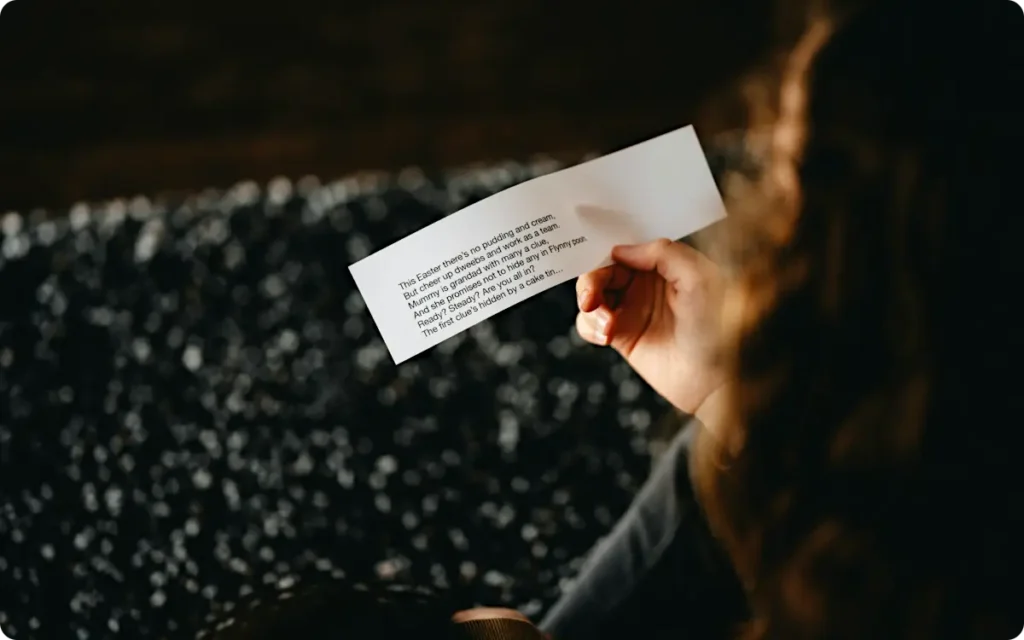
Teens want puzzles, social sharing opportunities, and slightly higher stakes. This scavenger hunt game combines cryptic clues, photo/video challenges, and optional geo-tagging for outdoor play. It works well for birthday parties, school groups, or neighborhood meet-ups.
Setup — Step by Step
Planning a scavenger hunt game for teens means creating something that’s fast-paced, social, and just challenging enough to feel rewarding. Blend logic puzzles, creative tasks, and photo or video challenges.
Teens enjoy autonomy, so allow them to use smartphones for clues or documentation while maintaining safety rules. Team-based play builds friendly competition, and the use of technology keeps the experience interactive and modern.
- Decide on outdoor, indoor, or mixed format and confirm permissions for public spaces.
- Create teams of 3–5 teens and assign a contact adult or organizer for safety.
- Prepare a list with 12–20 clues mixing riddles, challenges, and creative photo/video tasks.
- Use smartphones: require timestamped photos or short videos as proof. Consider a private hashtag for social sharing.
- Set rules for privacy, property respect, and safety (no trespassing, no disturbing strangers).
- Introduce optional bonus mechanics (extra points for speed, creativity, or stealth).
- Set a longer time window (45–90 minutes) depending on distance and number of clues.
- Conclude with scoring, public sharing of the best photos, and meaningful prizes (gift cards, experience vouchers).
Clue Examples (riddles, social tasks, geolocation)
Teen scavenger hunt clues should strike a balance between cleverness and creativity. Combine riddles that test reasoning with digital challenges that require photo or video proof. You can include optional GPS or map-based clues for outdoor versions, adding a light sense of adventure.
Social tasks, like recreating memes or local landmarks, help teens bond and bring humor into the game. End with a final riddle that ties all clues together for a satisfying finish.
- Riddle: “I guard the gate but have no guard; my teeth are spikes, my color is yard.” (find an ornamental gate or fence post)
- Photo task: “Recreate a movie poster using only items from your backpack.”
- Geo-clue: “Find the plaque with a year that ends in ‘99’ and take a selfie next to it.”
- Code puzzle: “Morse code: ·– ···– —– (translate to a word, then find the item matching that word).”
- Video task: “Film a 20-second ‘news report’ about ‘the missing sock’ at the park bench.”
- Creative challenge: “Compose a 30-second jingle using three random words from a clue envelope.”
- Scavenger item: a leaf shaped like a star (nature scavenger hunt element).
- Social media (optional): “Post one photo to the private event hashtag, most likes wins bonus points.”
Office and Team-Building Scavenger Hunt Game
An office scavenger hunt game is a structured way to boost collaboration and problem-solving. The example below works for small-to-medium-sized teams and can be adapted for hybrid workplaces using digital clues.
Setup — Step by Step
An office scavenger hunt game builds teamwork and improves communication in a fun, informal way. Start by clarifying the goal, whether you’re promoting collaboration, morale, or creativity. Prepare a balanced mix of company-related trivia, physical activities, and problem-solving tasks.
Ensure teams mix departments so employees interact beyond their usual groups. Wrap up with a debrief to discuss teamwork insights and lessons learned.
- Align objectives: decide whether the focus is ice-breakers, leadership, or team problem-solving.
- Get management buy-in and schedule a time that minimally disrupts work.
- Form cross-department teams of 3–6 people to encourage new connections.
- Create a mix of tasks: trivia about company history, collaboration puzzles, and small physical finds. Include one or two charity or community-focused tasks for added meaning.
- Prepare materials: printed lists, envelopes with puzzles, stationery, or a digital scavenger hunt platform.
- Set a strict time window (30–60 minutes) and clear scoring rules.
- Provide a debrief slot (15–30 minutes) for teams to reflect on teamwork and lessons learned.
- Reward: offer team lunches, trophy, or a donation in the winning team’s name.
Clue and Task Examples (teamwork and skill-building)
Keep clues professional yet playful. Focus on activities that highlight cooperation, quick thinking, and communication. Include trivia that celebrates company culture or history, and physical tasks that require teamwork.
Reward creativity and collaboration as much as accuracy. The best office scavenger hunt clues encourage laughter while subtly reinforcing shared values and goals within the workplace.
- Company trivia: “Find the framed photo from the company’s founding year and note who’s in it.”
- Collaboration puzzle: “Using only the materials in this envelope, build the tallest freestanding tower in 7 minutes.”
- Photo proof: “Take a team photo with someone from another department holding the company mug.”
- Brain teaser: “Solve the riddle in envelope A to reveal your next conference room location.”
- Office item find: “Locate the box of branded pens and bring back one unopened pen.”
- Client-focused task: “Write a 2-sentence ‘thank you’ note to a client and drop it in the HR box.”
- Charity task: “Collect and bring back 3 non-perishable items for the donation basket to earn 10 bonus points.”
- Debrief prompt: “Describe one moment where your team communicated well and one improvement for next time.”
Themed Scavenger Hunt Game Example — Christmas Scavenger Hunt
A Christmas scavenger hunt injects holiday cheer with seasonal clues, ornaments, and family-friendly challenges. This complete game works for living rooms, neighborhoods (indoor/outdoor hybrid), or community events.
Setup — Step by Step
A Christmas scavenger hunt game adds extra sparkle to any holiday gathering. Start by choosing locations that are festive and safe, like your living room, backyard, or neighborhood. Decorate with seasonal touches and use small props like ornaments, bells, and ribbons for hidden items.
Incorporate music, hot chocolate breaks, and family-friendly tasks to keep the mood joyful. Include a charitable stop for an extra feel-good element, such as collecting food or toy donations.
- Choose a setting: home, neighborhood block, or community center. Confirm any permits or neighbor permissions if going public.
- Create a festive map or checklist that includes ornaments, holiday symbols, and charity tasks.
- Use themed props: jingle bells, candy canes, small ornaments, Santa hat, holiday ribbons.
- Hide 10–15 items and create 4–6 challenge stations (sing a carol, wrap a present blindfolded).
- Add a charitable element: include a stop that asks teams to drop a canned good at a donation box.
- Provide small prizes like hot cocoa vouchers, mini stockings, or holiday cookies for all participants.
- End with a group sing-along or cookie-decorating station to celebrate together.
Clue and Challenge Examples (festive riddles and tasks)
Holiday-themed clues should be cheerful, rhyming, and easy for all ages to understand. Combine item-based clues with simple activities like singing, counting decorations, or finding hidden ornaments. Encourage participants to take themed photos and work together to solve festive riddles.
End with a small prize or shared treat, like a holiday cookie box, to bring the Christmas scavenger hunt game to a warm, festive close.
- Riddle: “I jingle on your door and sound so bright, find me hanging where you come in at night.” (hang a bell at the front door)
- Picture clue: Santa’s glove, hide a small mitten ornament under the tree skirt.
- Task: “Sing the second verse of ‘Jingle Bells’ at the mailbox to earn your next hint.”
- Item find: a candy cane taped behind a porch railing.
- Photo challenge: “Take a team photo wearing at least one ugly sweater and a Santa hat.”
- Charity stop: “Bring one non-perishable food item to the wreath at the community center.”
- Puzzle clue: “Count the red ornaments on the small tree, that number is the next envelope to open.”
- Final treasure (sequential ending option): “Solve the last rhyme to reveal the location of the holiday treasure, a box of cookies or a secret present.”
Tips for Running a Smooth Scavenger Hunt Game for Large Groups
Hosting a scavenger hunt game for a big crowd can be exciting but requires careful organization to keep everyone engaged and on track. When multiple teams are competing at once, planning ahead helps prevent confusion and ensures fair play. These tips will help you manage pacing, scoring, and teamwork so your scavenger hunt for large groups runs seamlessly from start to finish.
Tips for organizing large-group scavenger hunts:
- Assign clear team leaders to coordinate communication and collect completed tasks.
- Prepare printed or digital lists so each team knows what to find and can track progress.
- Set specific rules about what counts as proof, such as photo evidence or item collection.
- Rotate team roles so quieter or younger participants still get a chance to contribute.
- Use checkpoints or volunteers to verify progress and maintain fairness.
- Stagger start times or create parallel routes if space is limited.
- Keep the schedule tight and end with a quick scoring session to maintain momentum.
Safety, Accessibility, and Fairness
No matter the theme or location, safety should always come first in any scavenger hunt game. Planning for accessibility and fairness ensures that everyone, regardless of ability or experience, can join in and have fun. A few smart precautions and inclusive design choices can make your scavenger hunt safe, welcoming, and enjoyable for all players.
Key safety and accessibility guidelines:
- Avoid using breakable, sharp, or hazardous items in your scavenger hunt list.
- Clearly define play boundaries and communicate them before the hunt begins.
- Assign adults or supervisors for hunts involving children or large groups.
- Make sure clues and challenges are accessible to players with mobility or sensory needs.
- Provide rest areas, water stations, and sunscreen for outdoor scavenger hunt events.
- Have a simple communication plan for emergencies or lost players.
- Keep clue difficulty balanced and offer hints if teams get stuck to maintain fairness.
Frequently Asked Questions (FAQs)
Before planning your own scavenger hunt game, you might have a few questions about how it differs from a treasure hunt, how to adjust difficulty levels, or how to host one for larger groups. This FAQ section answers the most common queries to help you organize a smooth, fun, and safe scavenger hunt experience for everyone involved.
What’s the difference between a scavenger hunt and a treasure hunt game?
A scavenger hunt focuses on finding listed objects or completing tasks from a prepared list, often simultaneously, while a treasure hunt game typically involves following sequential clues that lead to a single final prize or “treasure.” The scavenger hunt emphasizes breadth and variety; the treasure hunt emphasizes a sequential puzzle-solving storyline.
How do I adapt a scavenger hunt game for teens?
Make clues more cryptic, add photo or video challenges, use geo-location prompts, and offer prizes that appeal to teen interests like gift cards or experience vouchers.
Can I run a scavenger hunt for large groups at a public park?
Yes, check local permits, plan clear boundaries, and use volunteers to supervise. Consider staggered starts or multiple routes for better crowd control.
What makes a good adult scavenger hunt?
Incorporate strategy, higher-level puzzles, local knowledge stops, and rewards that match adult tastes. Keep the pacing brisk and include breaks for socializing if the hunt covers large areas.
Final thoughts: Why the Scavenger Hunt Game Remains a Party Favorite
The scavenger hunt game is adaptable, social, and endlessly creative, perfect for birthdays, holidays, team-building, or casual gatherings. With simple planning, attention to safety, and a few thoughtful twists, your scavenger hunt will create memories and laughter for all ages. Consider charity or fundraiser versions where a scavenger hunt game raises awareness while offering entertainment.
Related game: Treasure Hunt Game